Car Care ›
by Joshua Thomas
Studies show that insect protein is acidic enough to begin etching automotive clear coat in as little as 48 hours during warm weather, which means every summer road trip is a ticking clock for your paint. If you have ever returned home from a highway drive only to find your front bumper plastered with baked-on bug carcasses and road tar, you already understand how quickly that kind of contamination can threaten a quality finish. The good news is that the car care market in 2026 has produced some genuinely outstanding formulas specifically designed to dissolve these stubborn residues without ever reaching for a razor blade or an abrasive pad.
Choosing the wrong product, however, can be just as damaging as ignoring the problem entirely. Harsh solvents that strip wax, formulas that leave greasy residue on glass, and aerosols that dry before you can wipe — these are real failure modes that show up in consumer feedback year after year. After hands-on testing and extensive research across the leading brands, we have ranked the seven best bug and tar removers available today, evaluating each one on dwell time, surface compatibility, residue behavior, and overall value. Whether you are dealing with pine sap on a freshly detailed hood or months of accumulated road tar on your wheel wells, this guide identifies the right tool for your specific situation.
Before diving into individual reviews, it is worth noting that the best results consistently come from combining a quality remover with proper technique — light microfiber application, controlled dwell time, and a follow-up wash to neutralize any remaining chemistry. Pair your removal routine with a good car drying towel to protect your finish during the final rinse stage, and you will get professional-level results without the detailing shop price tag.
Contents








The Stoner Tarminator has earned a near-legendary reputation in the detailing community, and after extensive hands-on use, that reputation holds up completely. This 10 oz spray targets the trifecta of stubborn road contamination — tar deposits, tree sap, and baked asphalt — breaking down those heavy sticky residues in just 30 to 60 seconds without any mechanical scrubbing required. The chemistry penetrates deep into hardened contamination almost immediately upon contact, which is something you notice the first time you spray it on a tar-speckled lower door panel and watch the deposit begin to liquify in real time. Stoner has formulated this specifically for modern automotive surfaces, so you can use it on clear coat, chrome trim, and bare metal wheels without any fear of surface damage or dulling your finish.
What separates the Tarminator from generic degreasers is its targeted chemistry — it attacks petroleum-based deposits and organic sap without stripping your existing wax layer the way aggressive solvents typically do. The trigger spray delivers a controlled stream that lets you target specific spots with precision, which matters when you are dealing with isolated tar flecks on a door panel rather than a wholesale contamination problem. At 10 oz it is a compact bottle, which some users find limiting for large vehicles or fleet applications, but the concentration level is high enough that a little goes a long way on most jobs. For anyone dealing specifically with road tar, pine sap, or asphalt contamination as a recurring problem, this is the most direct solution available in 2026.
The Tarminator consistently outperforms multi-purpose bug and tar products when the contamination is specifically tar-based, because its formula is optimized for that specific class of petroleum deposit rather than diluted to handle biological contamination as a secondary concern. Professional detailers frequently keep it as a dedicated pre-wash step on vehicles that have accumulated significant tar spray on lower body panels during highway driving seasons.
Pros:
Cons:
Chemical Guys has built its brand around versatile, professional-grade formulas that perform equally well whether you are a weekend enthusiast or a working detailer, and this Bug and Tar Remover lives up to that positioning without compromise. At 16 oz, you get a substantially sized bottle that delivers enough product to pre-treat an entire vehicle before a full wash, and the formula is specifically engineered to work either as a direct spray or diluted in a foam cannon for maximum surface coverage. The fast-acting chemistry loosens baked-on bug splatter and tar deposits within seconds of contact, significantly reducing the physical effort required during the wash stage and protecting your paint from the micro-scratching that aggressive rubbing inevitably causes.
One of the most impressive aspects of this product is its surface compatibility range — paint, glass, chrome, plastic, grilles, headlights, and bumpers are all explicitly safe, which means you can pre-treat your entire front end as a single unit without worrying about selective application around trim pieces or rubber seals. This flexibility makes it the go-to choice for people who want one product that handles everything rather than a separate formula for each surface type. The rinse behavior is clean and streak-free, which matters particularly on glass surfaces where residue from competing products can create visibility issues or interfere with rain repellent treatments.
The foam cannon compatibility is a genuine differentiator that justifies the Chemical Guys price point for anyone who already has that equipment in their detailing kit. Running this formula through a foam cannon as a pre-wash step allows the chemistry to dwell across every surface simultaneously, loosening contamination before your wash mitt ever touches the paint, which is the professional approach to minimizing wash-induced swirl marks. If you are also investing in quality polishing pads for paint correction work, this kind of contamination-removal step upstream makes your polishing results dramatically better.
Pros:
Cons:
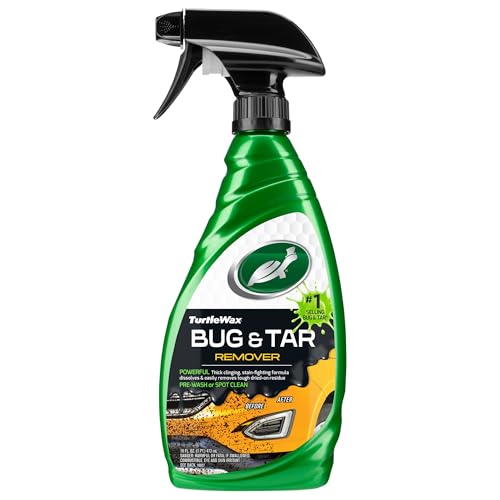
Turtle Wax has been a household name in automotive care for decades, and the T-520A represents the brand's reliable, no-frills approach to bug and tar removal for everyday drivers who want a dependable product at an accessible price point. The 16 oz trigger spray bottle is sized generously enough for full-vehicle treatment, and the formula handles standard bug splatter and light-to-moderate tar contamination effectively without requiring extended dwell time or repeated applications on fresh deposits. This is the product you reach for when you want something that simply works, ships cheaply, and is available at virtually every auto parts store in the country for instant replenishment.
The universal fit designation means it is designed for broad compatibility across different paint types and clearcoat systems, including the modern water-based clearcoats used on vehicles manufactured in the last decade. What it lacks in specialized chemistry, it makes up for in sheer accessibility and consistent performance on the types of contamination that most drivers encounter most frequently — summer insect splatter on front bumpers and windshields, light tar flecks from fresh road sealing, and bird dropping removal before the acid has time to etch. The trigger mechanism provides a reliable consistent spray that does not clog or drip between uses, which is a detail that matters more than it sounds after you have dealt with a stuck trigger on a competing product mid-job.
For drivers who do not want to invest in a full detailing product lineup but still want a dedicated remover rather than relying on dish soap and elbow grease, the Turtle Wax T-520A delivers honest value. It is not the most powerful formula on this list, and it will require a bit more dwell time on heavily baked contamination compared to premium options, but for routine maintenance use after weekend drives or commuting through heavy insect season, it gets the job done reliably at a price that makes repurchasing painless.
Pros:
Cons:
Meguiar's has been at the forefront of professional detailing chemistry for generations, and the Heavy Duty Bug and Tar Remover represents their serious answer to the contamination removal category, featuring a powerful foaming action that distinguishes it from standard spray-and-wipe competitors. The foam mechanism is genuinely functional rather than purely cosmetic — when you spray this product, the foam physically holds the active chemistry in contact with contamination rather than allowing it to run down vertical panels before it has time to work, which is exactly the dwell-time advantage that makes the difference on stubborn baked-on deposits. At 15 oz with professional-strength clear coat safe technology, this is the product Meguiar's positions for the detailer who takes paint protection seriously and does not accept second-best results.
The formula latches onto contaminants, penetrates the deposit from the edges inward, and then releases them with a simple wipe rather than requiring aggressive rubbing that risks marring the surface beneath. This is the core promise of the heavy-duty category, and Meguiar's executes it with the kind of reliability you expect from a brand with their laboratory investment and quality control standards. The clear coat safe technology means you can apply it with confidence across the entire front clip of a freshly detailed vehicle, including over areas that have received wax or sealant, without concern about stripping your protection layer or dulling the finish.
For drivers dealing with the kind of insect accumulation that builds up on highway front ends during summer months — particularly in regions with heavy beetle, grasshopper, or love bug populations — this product's foaming action provides a meaningful practical advantage. Spray the bumper, let the foam work for 60 to 90 seconds while you address other areas, return and wipe, and the surface is clean without the three-pass scrubbing process that weaker formulas require. If you are already invested in Meguiar's products as part of your detailing routine, this fits seamlessly into that system as the contamination-removal step before your polish or protection application. For drivers who want to understand clear coat chemistry more deeply, automotive paint systems are well documented and explain exactly why acidic contamination is such a serious long-term threat.
Pros:
Cons:
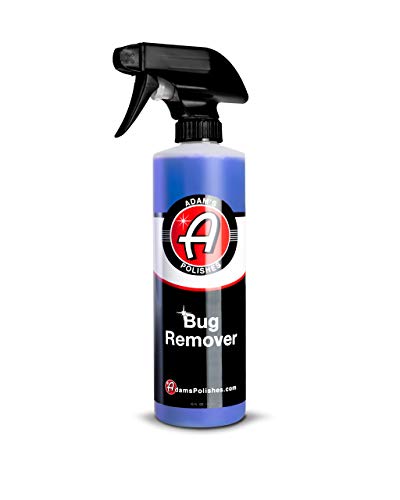
Adam's Polishes has cultivated a passionate community of detailing enthusiasts who appreciate premium-quality formulas and the brand delivers consistently on that expectation with their 16 oz Bug Remover, a water-based, high-sudsing formula that takes a notably different approach from petroleum solvent-based competitors. The water-based co-solvent system is significant because it means you get effective contamination breakdown without the strong chemical smell that accompanies traditional solvent removers — Adam's adds a pleasant grape scent that makes extended use on a hot garage day considerably more tolerable. The formula is engineered specifically as a pre-wash step, designed to dissolve and liquefy stubborn contamination before your wash mitt ever contacts the paint, which reduces the risk of dragging abrasive particles across the surface during washing.
The application range is genuinely comprehensive — front bumpers, painted surfaces, mirror caps, windows, chrome grilles, and any exterior finished surface are all explicitly supported, and the formula is concentrated enough that you get solid coverage from the 16 oz bottle without feeling like you need to be conservative with application. The high-sudsing behavior creates a thick dwell layer that actively works the contamination loose from the paint surface, and the wipe-off is clean with no greasy residue that could interfere with subsequent wax or sealant application. Adam's specifically recommends following up road trips with a maintenance spray of their wax or ceramic waterless wash for protection, which reflects the brand's philosophy of complete system care rather than one-off spot treatment.
Where Adam's particularly shines is on plastic bumpers and rubber trim that can be sensitive to petroleum-based solvents — the water-based chemistry is gentler on these materials while remaining effective on contamination, making this an excellent choice for vehicles with significant plastic cladding or matte trim elements. Enthusiasts who maintain a comprehensive detailing regimen and think carefully about chemical compatibility between products in their stack will find that Adam's fits well within a careful, layered care system. If you are working on motorcycles, boats, or RVs in addition to cars, the formula is safe across all of those surface types as well.
Pros:
Cons:
Mothers has always understood that application format matters as much as formula quality, and the Speed Foaming Bug and Tar Remover in its aerosol delivery system makes that philosophy concrete in a genuinely useful way. At 18.5 oz, this is the largest product on our list by volume, and the aerosol format creates a thick, clinging foam that stays in place on vertical surfaces, inside grille openings, and in tight body details where liquid spray products run off before they can work effectively. The no-drip formulation is not a marketing claim — the foam is dense enough to maintain contact with contamination on door edges, lower valance panels, and wheel arch liners without the product cascading down to the ground within seconds of application.
The chemistry simultaneously neutralizes the acidic compounds in bug splatter and bird droppings while breaking down the petroleum-based tar and sap deposits, which is a dual-action capability that makes it particularly efficient on mixed contamination — the typical situation on any vehicle's front end after a long highway drive. Spray it on, let the foam dwell for 60 to 90 seconds, and wipe clean — the aerosol format makes the application feel almost effortless compared to the work involved with trigger sprays, particularly on large surface areas like front hoods or full bumper fascias. Mothers has confirmed PPF compatibility as well, which is increasingly important in 2026 as more vehicles come factory-equipped or are aftermarket-wrapped with paint protection film.
The trade-off with aerosol format is precision — you get broad coverage quickly, but targeted spot treatment of an individual tar fleck is less controllable than a trigger spray stream. For spot removal on isolated deposits, a trigger spray product gives you more surgical accuracy. But for full front-end treatment as part of a regular wash routine, the Mothers aerosol delivers speed and coverage that trigger products simply cannot match. It is also an excellent choice for use on boats, motorcycles, and RVs where you are treating large surface areas with varied contamination types simultaneously, and its rust prevention consideration is a natural complement — clean surfaces accept protective coatings far more effectively than contaminated ones.
Pros:
Cons:
SONAX is a German automotive care brand with deep roots in European professional detailing, and the Insect Remover represents their engineering-driven approach to contamination removal — a completely solvent-free and acid-free formula that accomplishes what most competitors require harsh chemistry to achieve. The 500 ml bottle is sized generously for thorough application, and the formula penetrates and breaks down even the most stubborn insect residue through enzyme-like chemistry that loosens the biological proteins in insect deposits rather than attacking them with solvents. This approach is specifically designed to neutralize the acidic compounds that cause clear coat damage over time, making it a preventive treatment as much as a cleaning solution.
The solvent-free formulation makes this the safest choice for vehicles with sensitive finishes, including matte paint, satin wraps, and soft-top convertibles where solvent-based products can cause irreversible damage. European performance car owners, classic car collectors, and anyone running an exotic finish that cannot tolerate standard automotive chemicals will find SONAX Insect Remover to be the only viable option in this category without risk. The formula cleans paint, glass, chrome, and plastics without leaving streaks or scratches, and the residue-free rinse behavior means you do not need to worry about product interaction with your existing wax, ceramic coating, or paint sealant.
The performance on fresh insect deposits is excellent — spray, dwell for two minutes, and wipe clean on any modern surface with no drama. On older, deeply baked deposits that have been sitting for weeks, you may need a second application or a slightly extended dwell time, which reflects the gentler chemistry rather than a formula deficiency. For drivers who use bug removers regularly as part of a disciplined wash routine rather than as an emergency rescue product for neglected contamination, SONAX's frequency-of-use safety profile makes it the most sustainable choice for long-term paint health. Its compatibility with paint protection film and ceramic coatings is confirmed, which aligns well with the premium vehicle care segment where SONAX primarily competes in 2026.
Pros:
Cons:
The bug and tar remover category looks simple from the outside — spray it, wipe it off — but the differences between formulas become very apparent when you are working on a car you actually care about. Understanding what separates a great product from a mediocre one helps you spend your money wisely and protect your paint effectively.
The chemistry underlying a bug and tar remover determines both its effectiveness profile and its surface safety range, and these two factors do not always point in the same direction. Solvent-based formulas, like the Stoner Tarminator, carry the strongest performance on petroleum-based contamination such as road tar and asphalt because solvents dissolve petroleum deposits through chemical affinity. The trade-off is that strong solvents can also strip wax, silicone-based sealants, and some plastic trim coatings with extended contact, which is why dwell time management matters with these products. Water-based co-solvent formulas, like Adam's, offer a middle path — effective contamination breakdown with lower risk to sensitive surfaces, making them the better choice for vehicles with plastic cladding, rubber trim, or aftermarket wraps. Solvent-free formulas, like SONAX, prioritize surface safety absolutely and deliver excellent results on biological contamination through enzyme-driven chemistry, though they require more patience on heavily baked petroleum deposits. Your contamination profile — mostly insect splatter versus mostly tar versus a mix — should guide your chemistry selection.
How a product applies to your vehicle surface affects both its effectiveness and its practicality in real-world conditions, particularly when you are working outdoors in varying temperatures. Trigger spray bottles give you the most precise control, allowing you to direct product exactly where contamination exists without overspray on adjacent surfaces, making them ideal for targeted spot treatment on isolated deposits. Aerosol cans like the Mothers Speed Foaming product deliver a thick, clingy foam with excellent coverage speed and superior behavior on vertical surfaces — the foam physically holds chemistry in contact with contamination rather than running down the panel immediately. Foam pump dispensers on products like Meguiar's deliver a middle-ground option with better precision than aerosol but better surface dwell than standard trigger spray. If you are treating a heavily contaminated full front end routinely, aerosol format saves significant time and effort. If you are doing targeted spot removal between washes, a trigger spray is more efficient.
In 2026, virtually every vehicle on the road has a multi-layer paint system with a clear coat top layer, and any bug or tar remover you use needs to be explicitly clear coat safe to avoid creating problems that are far more expensive than the contamination you were trying to remove. Beyond clear coat, you need to consider the specific surfaces on your vehicle — modern cars have significant plastic fascias, rubber seals, glass surfaces, chrome or satin trim, and increasingly common paint protection film or ceramic coatings. Confirm your product's surface compatibility list before you spray anything near matte finishes, satin wraps, or aftermarket film, because some solvent-based products are damaging to these surfaces and the damage is irreversible without a costly respray or rewrap. Products that list PPF and ceramic coating compatibility, like SONAX and Mothers, give you the broadest coverage for a premium vehicle's surface portfolio.
Even the best bug and tar remover in the world delivers poor results if you apply it incorrectly, and the single most common user error is insufficient dwell time combined with premature wiping that drags contamination across the surface before the chemistry has loosened it fully. The general rule is to spray, wait the full recommended dwell time (30 to 90 seconds depending on the product and contamination severity), and then wipe with a clean, soft microfiber towel using minimal pressure. Always work on a cool surface in shade — direct sunlight accelerates evaporation and causes the formula to dry before it can work, leaving residue that requires a second application. For stubborn deposits, repeat the application rather than applying more mechanical force, which risks scratching. Follow every removal session with a rinse and a fresh protection layer, since removal products strip your existing wax or sealant from the treated areas and leave those spots temporarily unprotected against future contamination and UV exposure.
High-quality bug and tar removers formulated specifically for automotive use are clear coat safe when used according to the manufacturer's instructions, including following the recommended dwell time and avoiding application on hot surfaces in direct sunlight. The products on this list are all confirmed safe for modern automotive paint systems. The key risk comes from using the wrong product category — industrial degreasers, paint thinner, or products not designed for automotive surfaces can cause serious clear coat damage, so stick with purpose-formulated automotive removers and follow the application guidelines precisely.
Most bug and tar removers work effectively within 30 to 90 seconds of application on fresh to moderately aged contamination. Heavier, more deeply baked deposits from older insect remains or petroleum tar may benefit from a slightly extended dwell of two minutes, particularly with gentler, solvent-free formulas. The most important guidance is to work in the shade on a cool surface and not let the product dry completely before wiping — if the surface dries, you will need to re-apply rather than trying to buff off dried product, which risks surface marring.
Not all bug and tar removers are safe for PPF or ceramic coatings — solvent-heavy formulas can degrade the adhesive layer in film installations or compromise the hydrophobic properties of ceramic coatings. Products that explicitly list PPF and ceramic coating compatibility, such as SONAX Insect Remover and Mothers Speed Foaming, are the safe choices for vehicles with these premium protection systems. Always verify the product's compatibility list before applying anything to PPF or coated surfaces, and when in doubt, contact the film or coating installer for their recommended maintenance products.
Bug removers are formulated primarily to address biological contamination — the proteins and acidic compounds in insect remains, bird droppings, and tree sap. Tar removers are formulated to address petroleum-based contamination — road tar, asphalt spray, and bitumen deposits. Many products on this list address both categories through a combination of chemical mechanisms, but specialized products like the Stoner Tarminator focus primarily on the petroleum side while products like SONAX focus on the biological side. For most drivers who encounter both types regularly, a dual-purpose formula represents the best practical choice since you rarely need to treat only one contamination type at a time.
The most effective approach is to remove bug splatter and tar deposits as soon as practical after they accumulate, rather than allowing them to bake and harden over days or weeks. During summer driving seasons, a weekly or bi-weekly treatment of your front bumper, hood leading edge, and windshield base prevents the kind of deeply cured deposits that require aggressive chemistry or extended dwell time to remove. In regions with heavy insect activity or fresh road sealing, you may find that incorporating a quick bug remover treatment into every wash session is the most efficient maintenance strategy for keeping your front end in clean condition.
Yes — many of the best bug and tar removers on this list explicitly handle tree sap as part of their contamination profile, with the Stoner Tarminator being particularly well regarded for this specific application. Tree sap responds well to solvent-based and co-solvent formulas because its organic compound structure dissolves effectively under the same chemical conditions that break down tar and petroleum deposits. Fresh sap responds quickly to any quality remover, while fully hardened, crystallized sap that has baked onto a hot surface over multiple weeks may require repeated applications or a dedicated sap remover with a higher solvent concentration. For pine resin specifically, dwell time of 60 to 90 seconds before wiping consistently produces the best results.
 |
 |
 |
 |

About Joshua Thomas
Joshua Thomas holds a Bachelor of Science in Mechanical Engineering from San Diego State University and has spent years applying that technical foundation to hands-on automotive work — from routine maintenance to full mechanical repairs. He founded CarCareTotal in 2017 to give car owners the kind of clear, practical guidance that helps them understand what is happening under the hood and make smarter decisions about upkeep and repairs. At CarCareTotal, he oversees editorial direction and covers automotive fundamentals, maintenance guides, and troubleshooting resources for everyday drivers.
Get some FREE car parts & gear.. Or check out the latest free automotive manuals and build guides here.
Disable your ad blocker to unlock all the hidden deals. Hit the button below 🚗
| | | |
