Car Care ›
by Diego Ramirez
The HERCULINER HCL1B8 is our top pick for roll-on bedliners in 2026 — it's the original DIY formula that still outperforms most competitors on durability and ease of application. If you're hauling lumber, dragging toolboxes, or just tired of watching your truck bed rust away, a quality roll-on bedliner is one of the best investments you can make for long-term protection.
Roll-on bedliners have come a long way from the chalky, peel-prone coatings of a decade ago. Today's polyurethane and rubber-based formulas bond permanently to metal, fiberglass, and even wood surfaces, creating a textured shield that resists impacts, UV damage, and corrosion. The best part? You don't need a spray gun or a professional booth. A roller, some masking tape, and a few hours of prep time are all it takes to get results that rival a $500+ professional spray-in job. Whether you're coating a full-size 8-foot bed or just reinforcing a utility trailer deck, these products deliver serious car care protection at a fraction of the cost.
We evaluated seven of the most popular roll-on bedliner kits on the market, testing them across coverage area, cure time, texture consistency, chemical resistance, and overall value. From budget-friendly quart-sized options to full gallon kits with applicator accessories, here's everything you need to make the right call.








Herculiner is the name that started the DIY bedliner revolution, and the HCL1B8 kit proves why it's still the benchmark in 2026. This is a solvent-based polyurethane formula loaded with rubber granules that create an aggressive, skid-resistant texture once cured. You get a full gallon — enough for a standard 6.5-foot truck bed with two coats — plus the roller and application tray included in the box. The three-step process is genuinely straightforward: scuff, roll, and wait. No mixing ratios to calculate, no hardener to add.
What separates Herculiner from water-based competitors is the cure strength. This coating bonds at a molecular level to bare metal, existing paint, fiberglass, wood, and even most plastics. Once it's fully cured at 24 hours, you're looking at a surface that won't chip, flake, or peel under normal truck bed abuse. The texture is coarser than spray-in alternatives, which some owners prefer for maximum grip when hauling loose cargo. It also works beautifully on trailer decks, boat ramps, and garage steps — anywhere you need traction and corrosion resistance.
The functional cure at 10-12 hours means you can carefully load the bed the next morning, though waiting the full 24 hours for complete hardening is worth the patience. Application temperature matters here — you want above 50°F and low humidity for the best results. One coat gives decent coverage, but two coats are necessary for that thick, professional-grade finish that'll handle years of punishment.
Pros:
Cons:
RAPTOR has built a massive following in the spray-on bedliner world, and their roll-on kit brings that same industrial-grade protection to the DIY crowd. The biggest selling point here is the ready-to-use formula — pop the lid and start rolling. No measuring hardener ratios, no mixing cups, no pot life anxiety. The one-gallon can covers approximately 65 square feet in two coats, which maps perfectly to a standard 6-foot bed with room for the tailgate.
The cured finish is noticeably tighter and more uniform than some competitors. RAPTOR's texture falls in that sweet spot between smooth enough to slide cargo and rough enough to prevent shifting during transit. Chemical resistance is a standout feature — this coating shrugs off gasoline, diesel, brake fluid, and most solvents you'd encounter in a truck bed environment. For anyone who hauls fuel cans, oil containers, or batteries regularly, that chemical resistance alone justifies the purchase. The anti-skid properties also make it a solid choice for trailer ramps and boat decks where wet-surface traction is critical.
Where RAPTOR really shines is versatility. The formula adheres well to tailgates, roll bars, fender flares, and rocker panels — essentially anywhere you need a tough protective shell. If you've already tackled your DIY bedliner project and want to extend protection to other vulnerable areas, this kit handles multi-surface applications without reformulating.
Pros:
Cons:
POR-15 has been the gold standard in rust prevention coatings for decades, and their OEM Bed Liner extends that pedigree to truck bed protection. This is a rubberized coating that delivers a texturized gloss black finish — noticeably more polished-looking than the matte, granular appearance of most competitors. If aesthetics matter to you alongside protection, POR-15 delivers a finish that genuinely looks factory-applied. The 128-fluid-ounce container gives you enough material for a full bed with proper coverage.
The real differentiator is what happens underneath that glossy surface. POR-15's formula is UV stable, which means it won't chalk, fade, or degrade from sun exposure the way some polyurethane coatings do over years of outdoor parking. It's also a low-odor product — a significant advantage if you're working in a home garage without industrial ventilation. Cleanup is soap and water, and any unused product can be resealed and stored for future touch-ups. That reusability factor is something you don't get with two-part urethane systems that have a limited pot life once mixed.
For the ultimate rust protection, POR-15 recommends their 3-Step Stop Rust System, applying the bed liner over their Rust Preventive Coating base layer. This combination creates a virtually impenetrable barrier against corrosion, which is particularly valuable if you're coating a bed that already has surface rust. The sound-dampening qualities are a nice bonus — you'll notice less road noise and vibration transmitted through the bed floor. Cure time is 24 hours for light duty and 48 hours for full load capacity, so plan your schedule accordingly.
Pros:
Cons:
Durabak-18 occupies a unique niche in the bedliner market — it's engineered specifically to handle marine environments where saltwater, constant moisture, and UV bombardment would destroy lesser coatings. If you own a boat and a truck, this is the one product that handles both. The waterproof, weatherproof, and saltwater-resistant formula stays sealed in conditions that would cause standard polyurethane coatings to blister and delaminate within a season. Commercial fishing operations, dock builders, and marina owners have relied on Durabak for years, and the consumer quart kit brings that same protection to weekend warriors.
Application flexibility is another major advantage. Durabak works equally well with a brush, paint roller, or spray gun — your choice based on the surface and your comfort level. The textured version covers approximately 60 square feet per gallon in two coats, while the smooth variant stretches to 75-80 square feet. Wood surfaces need three coats for proper penetration and adhesion, which is worth noting if you're coating a wooden trailer deck or boat interior. The all-in-one formulation means there's no hardener to mix, reducing application complexity significantly.
The quart size makes Durabak-18 an excellent choice for targeted projects rather than full bed coverage. Think toolbox mounting areas, wheel wells, tailgate edges, or touch-ups on existing coatings. It's also ideal for coating boat ladders, ramps, catwalks, and loading dock edges where slip resistance on wet surfaces prevents serious injuries. The anti-skid finish performs exceptionally well when wet — a claim not every bedliner can make honestly. If you're setting up a garage workbench area and want to protect the surrounding floor from chemical spills, Durabak handles that application too.
Pros:
Cons:
Custom Coat takes the guesswork out of kit assembly by including everything you need in one box. You get four 24-ounce cans of bed liner base, four 8-ounce cans of standard hardener, and a complete 7-piece applicator kit with two rollers, a frame, two brushes, and a coating tray with liner. The 3-to-1 mix ratio is simple to manage, and the estimated coverage of 110-130 square feet at 10 mils wet film thickness is the most generous in this roundup. That's enough for even an 8-foot bed with two full coats and leftover material for touch-ups.
Being a two-part urethane system, Custom Coat cures harder and more chemically resistant than single-component products. The crosslinked polymer network that forms during the hardener reaction creates a coating that flexes without cracking — a critical characteristic when your truck bed is absorbing impacts from heavy loads. This flexibility also means it won't crack in extreme cold or become soft in extreme heat, handling temperature swings that would damage lesser coatings. UV resistance keeps the black finish looking fresh rather than fading to that chalky gray you see on neglected beds.
The two-part chemistry does introduce a pot life limitation — once you mix base and hardener, you're on the clock. Plan your application in sections, mixing only what you need for each area. The sound-dampening properties are noticeable and genuinely reduce the hollow "boom" that bare metal truck beds produce when you drop a toolbox in. For the price-to-coverage ratio alone, Custom Coat is hard to beat, and the included applicator kit means you're not hunting through hardware store aisles before you can start the project.
Pros:
Cons:
This is the standalone gallon can version of Herculiner — same legendary formula as the HCL1B8 kit but without the included roller and tray. If you already have quality applicator tools from a previous project or prefer using your own professional-grade roller setup, this option saves you a few dollars while delivering identical protection. The 55-60 square feet of coverage per gallon in two coats handles a standard truck bed comfortably, and the formula works on every surface the kit version does.
The application process remains Herculiner's signature three-step simplicity: prep the surface, apply the coating, and let it dry. Functional cure hits at 10-12 hours — one of the fastest in the bedliner category — with full hardness at 24 hours. That quick turnaround is a genuine advantage if you're working on a weekend timeline and need the truck back in service by Monday morning. The tough, textured finish cures stronger than water-based alternatives because Herculiner uses a solvent-based polyurethane backbone that forms a more durable crosslinked film.
For contractors and fleet managers coating multiple vehicles, the standalone can format is the practical choice. Buy the kit once for the roller and tray, then stock up on gallon cans for repeat applications. The coating prevents rust permanently on bare metal surfaces and creates a protective barrier that won't chip, flake, or peel under heavy commercial use. It's also worth considering for non-automotive applications — walkways, loading ramps, utility trailer decks, and RV underbody protection are all within this product's wheelhouse.
Pros:
Cons:
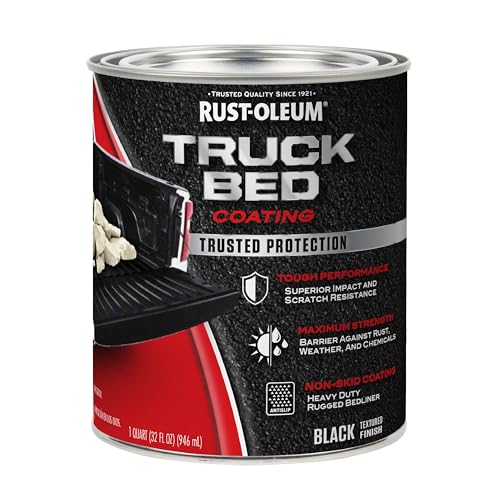
Rust-Oleum's entry into the bedliner space takes the brand's legendary rust-stopping expertise and packages it in a quart-sized container that's perfect for targeted applications or smaller truck beds. This is a water-based formula, which means significantly lower odor and easier cleanup compared to solvent-based alternatives. You can apply it in a home garage without a respirator, and brushes clean up with soap and water. At 40 square feet per quart, you'll need two quarts for a mid-size bed or three to four for a full-size application with adequate coverage.
The fast-dry formula sets it apart from the competition on turnaround time. Touch-dry in just 1-2 hours, you can apply a second coat within the same working session — something that's not possible with most competitors that require overnight cure between coats. The coating conforms to the contours of your truck bed, filling minor dents and irregularities while building up a protective layer with solid abrasion resistance. As you'd expect from the Stops Rust line, corrosion protection is a primary engineered benefit, not an afterthought.
The trade-off for water-based convenience is durability. This coating won't match the hardness or impact resistance of two-part urethane systems like Custom Coat, and the texture is finer and less aggressive than Herculiner's rubber-granule finish. But for the price point, it's an outstanding value for truck owners who want decent protection without the commitment of a premium system. It's also an excellent choice for coating pickup truck utility boxes, underbody panels, and fender wells where maximum durability isn't the primary concern.
Pros:
Cons:
The chemistry behind your bedliner determines everything about its performance. Solvent-based formulas like Herculiner penetrate deeper into the substrate and cure into a harder, more chemically resistant film. They're the workhorse choice for maximum durability. Water-based options like Rust-Oleum trade some of that hardness for easier application — lower odor, simpler cleanup, and faster initial dry times make them appealing for first-time applicators and garage environments without heavy ventilation.
Two-part urethane systems like Custom Coat sit at the top of the performance ladder. The chemical reaction between base and hardener creates a crosslinked polymer network that outperforms both single-component types in impact resistance, flexibility, and chemical resistance. The trade-off is complexity — you need to measure ratios accurately and work within the pot life window. For professional results that rival spray-in applications, two-part urethane is the clear winner.
Matching product volume to your bed size prevents both waste and inadequate coverage. A standard short bed (5.5-6 feet) needs approximately 50-65 square feet of coverage in two coats. Mid-size beds (6.5 feet) run 65-80 square feet, and full-size 8-foot beds demand 90-110+ square feet for proper two-coat coverage including the tailgate. Always buy slightly more than your calculation suggests — running short mid-application forces you to stop at an unnatural seam point, which shows in the finished product.
Products like Custom Coat with 110-130 square feet per gallon give you comfortable margins for full-size beds with leftover for touch-ups. Quart-sized options from Durabak and Rust-Oleum work best for targeted repairs, small beds, or utility trailers where buying a full gallon would be overkill.
Cure time directly impacts when you can use your truck after application. Rust-Oleum leads the pack with 1-2 hour touch-dry times, letting you apply multiple coats in a single day. Herculiner's 10-12 hour functional cure means an overnight wait before careful loading. POR-15's 48-hour full cure for regular use requires the most patience but delivers exceptional hardness once complete.
Plan your project around the cure schedule. Ideally, start early on a Friday morning with a solvent-based product, and your truck is ready for light Monday use. Two-part urethanes need a similar timeline. Water-based formulas can sometimes squeeze into a single-day project. Temperature and humidity affect all cure times — cold or damp conditions extend them significantly, so check your forecast before starting.
If your project extends beyond the truck bed, verify surface compatibility before you buy. Most formulas in this roundup handle bare metal, painted surfaces, and fiberglass without issues. Wood surfaces require additional coats with some products — Durabak specifies three coats on wood versus two on metal. Plastic and PVC compatibility varies; Herculiner explicitly supports both while some competitors don't guarantee adhesion on polymer surfaces.
Marine applications demand special attention. Saltwater, constant UV exposure, and freeze-thaw cycling create a brutally harsh environment that separates premium coatings from budget options. Durabak's marine-rated formula is the clear choice for boats, docks, and coastal equipment. For standard automotive use with occasional rain exposure, any product in this roundup delivers adequate moisture protection.
A properly applied roll-on bedliner lasts 3-5 years under heavy commercial use and 5-10+ years under normal recreational truck use. Two-part urethane systems tend to outlast single-component formulas. The key factors are surface preparation quality, number of coats applied, and the type of loads you're hauling. Touch-up applications can extend the life indefinitely — most products bond to their own cured coating, so spot repairs integrate seamlessly.
Not necessarily. If the existing coating is well-adhered with no peeling, flaking, or bubbling, you can scuff it with 80-grit sandpaper and apply the new coating directly over it. Loose or damaged sections must be scraped away completely down to bare substrate. If the old liner is a drop-in plastic type, remove it entirely — roll-on coatings won't bond reliably to polyethylene drop-in liners. Clean the surface with a wax-and-grease remover before coating regardless of substrate condition.
Several products in this category are dual-purpose. Custom Coat and Durabak-18 can both be sprayed through a standard paint gun or HVLP system. Spraying produces a more uniform texture and thinner film build, which some users prefer aesthetically. However, rolling builds thicker coats faster and doesn't require spray equipment, masking of the entire truck exterior, or dealing with overspray. For most DIY applications, rolling delivers better results with less equipment and preparation.
Surface prep is the single most important factor in bedliner longevity. Start by removing everything from the bed — bolts, tie-down hooks, bed rails, and tailgate if possible. Wash with degreaser to remove all oil, dirt, and contaminants. Sand the entire surface with 80-grit sandpaper or a scuff pad to create mechanical adhesion. Wipe down with a wax-and-grease remover, let it dry completely, and mask off anything you don't want coated. Skip any of these steps and you risk peeling within months.
Professional spray-in liners from shops like LINE-X and Rhino Linings use high-pressure plural-component spray systems that produce a denser, harder coating than roll-on products. That said, the gap has narrowed considerably. Two-part urethane roll-on systems like Custom Coat approach professional-grade durability at a fraction of the cost. Where professional spray-ins consistently outperform DIY is in coverage uniformity and bond strength in hard-to-reach areas like wheel well lips and tailgate channels.
Apply when air and surface temperatures are between 60-80°F with relative humidity below 60%. Most products specify a minimum of 50°F, but warmer temperatures within the ideal range promote better flow, leveling, and cure chemistry. Avoid direct sunlight on the bed surface during application — it heats metal unevenly and can cause the coating to skin over before bonding properly. Overcast days with mild temperatures are perfect. Never apply if rain is expected within the cure window.
Spend your time on prep, not on picking the perfect product — every bedliner in this roundup will protect your truck, but none of them can overcome a surface you didn't sand.
 |
 |
 |
 |

About Diego Ramirez
Diego Ramirez has been wrenching on cars since his teenage years and has built a deep practical knowledge of automotive maintenance and paint protection through years of hands-on work. He specializes in fluid service intervals, preventive care routines, exterior protection products, and the consistent habits that extend a vehicle's lifespan well beyond average. At CarCareTotal, he covers car care guides, cleaning and detailing products, and exterior maintenance and protection reviews.
Get some FREE car parts & gear.. Or check out the latest free automotive manuals and build guides here.
Disable your ad blocker to unlock all the hidden deals. Hit the button below 🚗
| | | |
