Audio ›
by Rachel Park
You're standing in an electronics aisle — or more likely scrolling through listing after listing at midnight — trying to figure out which tweeters will actually transform your factory audio into something worth cranking up. The highs in your current setup sound harsh or thin, and you know a quality tweeter pair is the fix. Picking the right one means understanding sensitivity ratings, crossover requirements, dome materials, and mounting compatibility before you spend a dollar.
Car tweeters handle the frequencies your woofers and midrange drivers simply cannot reproduce cleanly — typically everything from 2,000 Hz up to 20,000 Hz and beyond. That's where vocals sit, where cymbal strikes live, and where string arrangements either shimmer or smear into noise. A car audio upgrade that skips the tweeter stage is an incomplete one. According to Wikipedia's overview of tweeter technology, the dome tweeter design has dominated automotive and home audio for decades precisely because its geometry distributes high-frequency energy in a wide, consistent dispersion pattern — critical in cabin environments where your listening position shifts constantly.
In 2026, the market offers everything from budget silk-dome units under $30 to audiophile-grade neodymium designs pushing $200 and beyond. This guide cuts through that noise by reviewing six of the best car tweeters across different price tiers and use cases, then walks you through the buying criteria that matter most. If you're also planning a full system build, check out our guide to the best amp wiring kits and the best single-din head units to round out your setup properly.
Contents
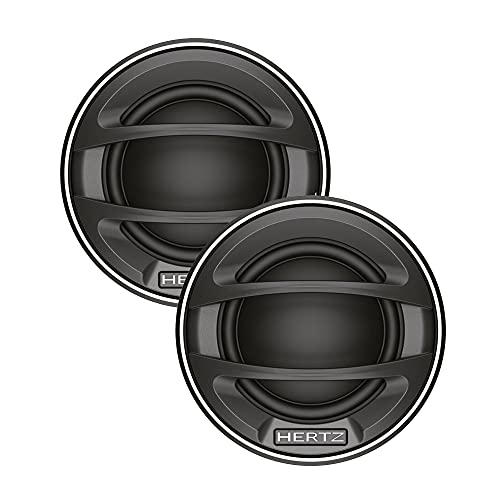








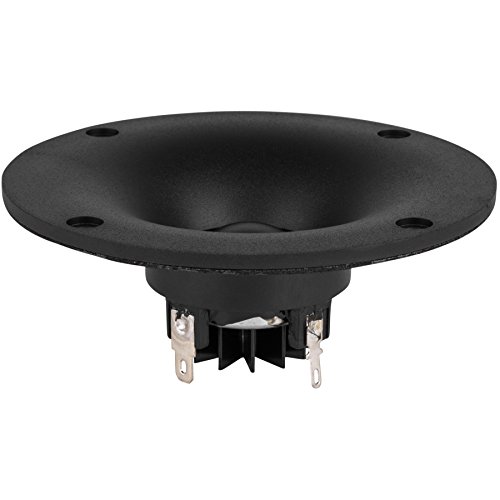
The HERTZ Mille Legend ML-2803 sits at the top of this list for good reason — it's the kind of tweeter that earns its price tag through measurable performance rather than brand marketing. The 28mm (1.38-inch) neodymium magnet assembly delivers a powerful, focused magnetic field with a fraction of the weight you'd find in a ferrite-based design, which translates directly into faster transient response and tighter high-frequency articulation. When you're listening to a well-recorded acoustic track, vocals and instrument harmonics reproduce with a precision that genuinely changes how you hear music you've heard a hundred times before.
HERTZ engineers its Mille series with an Italian design philosophy — balanced tonality over hyped, sibilant highs. The ML-2803's frequency response sits notably flat well into the upper registers, avoiding the sharp peak around 8–10 kHz that makes cheaper tweeters fatiguing on long drives. Mounting versatility is generous: you get flush, surface, and angle-mount brackets in the box, so fitting these into factory locations or custom pods doesn't require improvisation. The crossover network included in the kit is sophisticated enough to protect the tweeter at reasonable slopes without demanding a separate component crossover unless you're building a dedicated multi-amp stage.
At this price tier, the ML-2803 competes directly with Focal and Morel — and it holds its own confidently. If you're investing in a full front-stage upgrade and want a tweeter that will remain satisfying even after you upgrade your amplification down the road, these are the ones to buy. Pair them with your existing car audio battery upgrade and the system synergy becomes immediately apparent at higher playback levels.
Pros:
Cons:
The LEIXIUSM XT25TG30 uses a Danish-engineered VIFA driver at its core, which is a meaningful distinction at this price point. VIFA (Videbaek Industrial Fabrication Association) has supplied OEM drivers to Scandinavian loudspeaker manufacturers for decades, and their XT25 platform represents a mature, well-characterized design that home audio builders have used in reference-quality builds. Getting that driver in an automotive-ready package for under $50 makes this tweeter one of the more interesting value propositions in the 2026 market, particularly for installers who understand what they're looking at on a datasheet.
The XT25TG30's 360-degree surround sound claim refers primarily to its wide horizontal dispersion characteristic, which is a real attribute of the ring-radiator topology VIFA employs — this isn't a marketing abstraction. The ring radiator geometry produces a notably even off-axis response that many conventional dome tweeters struggle to match, meaning you get consistent high-frequency coverage across the entire listening area rather than a sweet spot that only rewards the driver's seat. The ability to operate without an external amplifier is useful for simple installs, though pairing it with dedicated amplification reveals its full dynamic ceiling.
Installation is genuinely straightforward: the 70mm cutout dimension fits many factory locations, and the wiring connections are standard spade terminals. If you're building a two-way system on a modest budget and want a tweeter that over-delivers on its spec sheet, the XT25TG30 is hard to argue against. The HD vocal reproduction that LEIXIUSM highlights in the marketing copy is not an exaggeration — this driver handles vocal midrange handoff cleanly at crossover points between 2,500 and 3,500 Hz.
Pros:
Cons:

Focal occupies a unique position in the car audio world — a French company with genuine roots in high-end home loudspeaker design, applying those engineering standards directly to automotive transducers. The TN-B Polyglass replaces the TN-A, TN-47, and TN-45 models and brings a 20mm aluminum/magnesium inverted dome construction that represents a fundamentally different approach than the textile and silk domes you find in most of the competition. The inverted dome geometry shifts the mechanical resonance behavior in a way that extends usable bandwidth and flattens the high-frequency rolloff, giving you more headroom in the upper registers where strings and cymbals live.
The push-pull neodymium magnet system used here is worth understanding: rather than a single magnet driving the voice coil in one direction, the push-pull configuration applies magnetic force symmetrically, reducing distortion at all amplitude levels. At 91dB sensitivity with a 15W RMS continuous power handling, the TN-B is not a high-power tweeter — it's an accuracy tweeter. You pair it with quality amplification and a proper passive or active crossover, and it rewards that investment with a transparency and detail retrieval that repositions your expectations about what car audio can sound like. The 8-ohm nominal impedance is worth factoring into your amplifier matching if you're running a multichannel setup.
One critical note: the TN-B does not include mounting housings, so you need Focal's dedicated mounting accessories or custom fabrication to integrate these into your install. That's not a flaw — it's a design choice that assumes you're building a dedicated stage rather than dropping tweeters into factory locations. If you're at that level of system planning, the TN-B rewards the commitment entirely.
Pros:
Cons:

Infinity's Reference series has always occupied a specific and valuable niche: step-up performance over factory audio at a price that doesn't require a dedicated savings plan. The REF-375TX 3/4-inch tweeter delivers on that promise with edge-driven textile dome construction — a design choice that produces smooth, extended high-frequency response without the metallic edge you sometimes encounter with aluminum dome competitors. Edge-driven means the voice coil attaches at the perimeter of the dome rather than the center, shifting the excursion behavior and producing more linear motion at higher amplitudes, which directly reduces harmonic distortion at real-world listening levels.
The newly engineered basket geometry Infinity developed for the 375TX specifically targets factory speaker replacement compatibility, and that engineering investment shows in the real world. You're fitting these tweeters into A-pillar pods, dash corners, and door locations that weren't designed for aftermarket components, and the REF-375TX accommodates those constraints better than most of its competitors at any price. The mounting hardware kit is complete and the installation instruction quality is unusually high for this segment.

What you get with the REF-375TX is a confident, musical tweeter that makes a genuine improvement over factory audio without demanding perfect system integration or high-end amplification to sound good. The competitive pricing means you can put the saved budget toward a quality crossover network or amplifier and end up with a better overall system than you would by overspending on tweeters alone. For the typical enthusiast building their first real component system, this is one of the most sensible starting points in 2026.
Pros:
Cons:
Rockford Fosgate's Power series has a decades-long reputation for delivering audiophile-oriented performance without the fragility that sometimes accompanies high-end home audio drivers transplanted into automotive environments. The T1T-S kit centers on a 1-inch fabric dome tweeter that handles 75 watts RMS continuously — a specification that matters enormously when you're pushing real power through a high-output amplifier. That 150-watt peak rating gives you substantial headroom for dynamic transients in music without risking thermal damage to the voice coil during extended listening sessions at elevated volume.
What makes the T1T-S a kit rather than just a tweeter pair is the inclusion of dedicated crossovers, trim rings, and full mounting hardware — everything you need from unboxing to final installation without a separate purchase. The crossovers are properly designed for the T1T-S's specific impedance and sensitivity characteristics, which is a meaningful benefit over universal crossover components that require manual tuning and impedance matching. Rockford's 4-ohm impedance rating integrates cleanly with most aftermarket amplifiers without creating bridging or damping factor complications.

The fabric dome material is a deliberate choice over titanium or aluminum — Rockford engineers the T1T-S for a presentation that's musical and extended without the ringing or harshness that can develop in metal dome designs when driven hard. If you're building an audiophile-oriented system and want the best-matched tweeter kit under the Rockford Power banner, the T1T-S delivers everything the marketing claims and then a bit more. It's particularly well-matched to listeners who value accuracy over enhancement — music sounds like the recording, not like a boosted or colored interpretation of it.
Pros:
Cons:
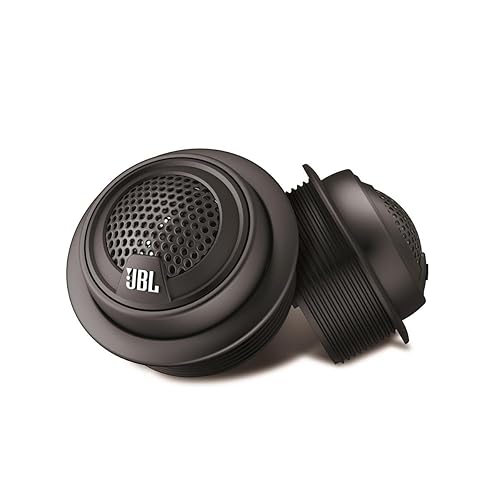
The Dayton Audio ND25FW-4 is something of a cult favorite in both home audio DIY circles and among car audio enthusiasts who build their own component systems from individual drivers. The waveguide-loaded design is the defining feature here — a carefully shaped horn structure integrated around the 1-inch soft dome that controls directivity and raises efficiency in ways that matter practically. The controlled directivity means you get predictable, even coverage rather than a tweeter that fires full-bandwidth energy in all directions equally, which reduces reflections off door panels and windows that otherwise blur the stereo image.
The waveguide also increases efficiency meaningfully: you get more acoustic output per watt than the raw sensitivity figure for an equivalent naked dome suggests. The low resonant frequency of 1,350 Hz is a technical highlight that separates the ND25FW-4 from most tweeters at any price — crossover points as low as 2,500 Hz become practical without risking driver damage, which gives you more flexibility in midrange/tweeter integration and reduces the frequency gap that component systems sometimes struggle to cover cleanly. Treated silk dome construction keeps the tonality smooth and natural, avoiding the metallic brightness that waveguide-loaded aluminum designs can sometimes produce.

This is not a plug-and-play tweeter for installers who want a complete kit with matched crossovers and brackets. The ND25FW-4 rewards builders who understand crossover design, who are willing to measure and tune their installs, and who want maximum performance from a moderate budget. If that description fits you — and if you're already considering building custom speaker pods or fabricating A-pillar mounts — this driver will outperform competitors costing significantly more when set up correctly. Also consider reading about motorcycle helmet speakers if you're exploring acoustic transducer technology across different form factors, as the principles of dome tweeter design translate directly between applications.
Pros:
Cons:

The dome material is the single most consequential decision point in tweeter selection, because it determines the fundamental character of every high-frequency note your system produces. Soft dome materials — silk, textile, and treated fabric — produce a warmer, more forgiving presentation that's less prone to listening fatigue on long drives. They absorb some of the mechanical resonance energy that causes the harsh, glassy edge characteristic of cheaper metal designs. Metal domes (aluminum, titanium, aluminum/magnesium alloys like the Focal TN-B) offer superior rigidity, extended bandwidth into the ultrasonic range, and faster transient response at the cost of a brighter, more analytical presentation that demands careful crossover tuning to avoid sibilance.
For daily listening across mixed music genres, soft or textile domes are the more forgiving choice. For dedicated audiophile installs where you're actively tuning the system with a DSP processor and parametric EQ, metal domes reward the extra effort with detail retrieval that soft domes simply can't match at equivalent price points. There's no universal right answer — it depends entirely on your listening priorities and the time you're willing to invest in system calibration.
Sensitivity — measured in dB at 1W/1m — tells you how efficiently a tweeter converts electrical power into acoustic output. A tweeter rated at 91dB (Focal TN-B) produces the same apparent loudness as one rated at 88dB using half the amplifier power. This matters because tweeters and woofers in a two-way component system need to be sensitivity-matched — or corrected with L-pads or DSP attenuation — so that neither driver dominates the frequency response at the crossover point. When you're matching a high-sensitivity tweeter to a lower-sensitivity midwoofer or coaxial, you'll need to pad the tweeter down or risk a bright, top-heavy sound.
Power handling tells you the continuous (RMS) and peak wattage a tweeter can absorb without thermal damage to its voice coil. Most factory replacement tweeters handle 15–30W RMS, which is sufficient for head unit or low-power amplifier setups. Tweeters like the Rockford Fosgate T1T-S — rated at 75W RMS — are engineered for high-power system builds where the amplifier can deliver real voltage swing into high-frequency peaks. Overshooting a tweeter's RMS rating, even momentarily, is the fastest way to burn out a voice coil, so always match power handling conservatively rather than optimistically.
The crossover frequency determines where your tweeter takes over from the midwoofer or coaxial speaker, and selecting the right point is critical for both sound quality and driver longevity. Most tweeters specify a minimum crossover frequency — typically 2,500 to 4,000 Hz for standard designs. Crossing over below the minimum exposes the tweeter's voice coil to excursion levels it isn't mechanically designed to handle, leading to distortion and eventual failure. The Dayton Audio ND25FW-4 is notable for its unusually low minimum crossover capability of 2,500 Hz, which is a genuine technical advantage for systems that want to minimize the midrange gap.
When you're selecting a tweeter, verify that your existing crossover network — whether passive in a component kit or active via a DSP head unit — can be set to a point within the tweeter's safe operating range. If you're using a factory head unit with a built-in high-pass filter, confirm its frequency setting matches the tweeter's requirements before installation. Getting this wrong won't just sound bad — it will damage the tweeter within hours of loud playback.
Even the best-performing tweeter fails its purpose if it physically can't be mounted at the correct location and angle in your vehicle. Tweeter placement has a direct effect on stereo imaging — high-frequency sounds are highly directional, so a tweeter pointed at your knee rather than your ear produces an off-axis response that collapses the soundstage. Most quality tweeters come with at least three mounting options: flush-mount (in a cut hole), surface-mount (a surface-attached pod), and angled brackets that let you redirect the driver without custom fabrication.
Measure your target mounting location before purchasing — particularly if you're targeting factory tweeter housings in the A-pillars or dash. The Infinity REF-375TX addresses this directly with its factory-fit-optimized basket geometry. For custom installs in fabricated pods, the mounting hardware is less important than the driver's physical dimensions and the ease of integrating it into your pod design. Always verify the cutout dimension and overall diameter against your available space before finalizing your selection.
A component tweeter is a standalone driver that you mount separately from the midwoofer, allowing you to position each driver independently for optimal stereo imaging and response. A coaxial tweeter is built into the center of a full-range speaker and fires through the same axis as the woofer cone. Component systems give you greater placement flexibility and typically deliver better soundstaging, but they require more complex installation and a proper crossover network. Coaxials are simpler to install but compromise on imaging because the tweeter position is fixed relative to the woofer.
Yes — every tweeter requires a high-pass crossover filter that blocks low-frequency content below the driver's safe operating range. Without a crossover, the tweeter receives the full frequency spectrum from the amplifier, forcing the small voice coil to attempt excursion it isn't designed for, which burns out the voice coil quickly. Component kits like the Rockford Fosgate T1T-S include dedicated passive crossovers matched to the tweeter's specifications. If you're using a standalone tweeter, you need to build or purchase a crossover network or use an active DSP system that handles filtering electronically before the signal reaches the amplifier.
Most car audio tweeters fall between 3/4 inch (19mm) and 1.5 inches (38mm) in dome diameter. Larger domes generally offer higher sensitivity and better power handling but can sacrifice high-frequency extension and dispersion characteristics. Smaller domes extend higher in frequency and disperse more evenly but may require more amplifier power to reach the same listening levels. The 1-inch (25mm) size is the most common compromise, offering balanced sensitivity, extension, and dispersion for the majority of car audio applications. The best size for your system depends primarily on the sensitivity of your midwoofers and the output level you need at your listening position.
Yes, tweeters can run passively from a factory head unit through a crossover network, and the LEIXIUSM XT25TG30 specifically highlights this capability. Head units typically output 14–20 watts RMS per channel, which is sufficient to drive sensitive tweeters (88dB+) to reasonable listening levels in most cabin environments. The important requirement is still a proper high-pass crossover — running tweeters directly off a head unit output without filtering risks damaging the driver at higher volume levels even at modest wattage. For the best performance at higher playback levels, a dedicated amplifier always produces superior results because it maintains lower distortion levels as power demand increases.
The crossover point should be set at or above the tweeter's specified minimum crossover frequency — typically between 2,500 Hz and 5,000 Hz for most designs. A common starting point for 1-inch dome tweeters is 3,500 Hz at 12dB per octave slope, which provides sufficient protection while maintaining a smooth handoff from the midwoofer. If you hear a gap or discontinuity at the crossover frequency during playback, lower the point slightly in 500 Hz increments until the transition sounds seamless. Drivers with low resonant frequencies like the Dayton Audio ND25FW-4 can accept lower crossover points, while smaller-dome designs benefit from higher crossover frequencies to avoid over-excursion.
Neodymium magnets produce a significantly stronger magnetic field per unit of weight compared to traditional ferrite (ceramic) magnets, which translates into several practical benefits in automotive applications. The stronger field means faster voice coil response and greater motor efficiency — the tweeter needs less current to generate the same acoustic output, or conversely, generates more output from the same current. Neodymium designs are also substantially lighter, which matters in component systems with multiple drivers. The primary disadvantage of neodymium is cost — the rare-earth material adds to manufacturing expense. Ferrite tweeters remain viable at lower price points where the weight and size penalties are acceptable trade-offs.
Buy the tweeter that matches your amplifier, your crossover, and your installation commitment — because the most expensive dome in the world sounds worse than a well-matched budget driver in a system that's actually set up correctly.
 |
 |
 |
 |

About Rachel Park
Rachel Park specializes in the interior and exterior upgrades that meaningfully change how a car looks, sounds, and feels on a daily basis. She has hands-on experience with head unit installations and audio system builds, LED and HID lighting conversions, interior refresh projects, and cosmetic exterior work — evaluated from both a DIY accessibility and quality-of-result perspective. At CarCareTotal, she covers car audio and electronics, lighting upgrades, and interior and exterior styling accessories.
Get some FREE car parts & gear.. Or check out the latest free automotive manuals and build guides here.
Disable your ad blocker to unlock all the hidden deals. Hit the button below 🚗
| | | |
