by Marcus Chen
Picture this: you just moved to the Pacific Northwest, your Subaru Outback's original tires are wearing thin, and the first big rainstorm of the season is rolling in. You need tires that can handle wet pavement, light snow, and the occasional gravel forest road — all without destroying your fuel economy. That's the exact situation thousands of Outback owners face every year, and picking the wrong tire makes every mile feel like a gamble.
The Subaru Outback is a purpose-built all-season machine. Its symmetrical AWD system is only as good as the rubber underneath it. Pair it with mediocre tires and you're wasting the platform's potential. Pair it with the right set and the Outback becomes genuinely capable in conditions that send other crossovers sideways. In 2026, the tire market for this class of vehicle is deeper and more competitive than ever — which means more choices, but also more noise to cut through.
This guide covers the seven best tires for Subaru Outback in 2026, tested against real-world criteria: wet traction, tread life, ride comfort, snow performance, and overall value. Whether your Outback sees icy mountain passes or just rainy city commutes, there's a set on this list that fits your driving profile. For more context on wheels and tires selection for all vehicle types, our category hub has you covered.
Contents








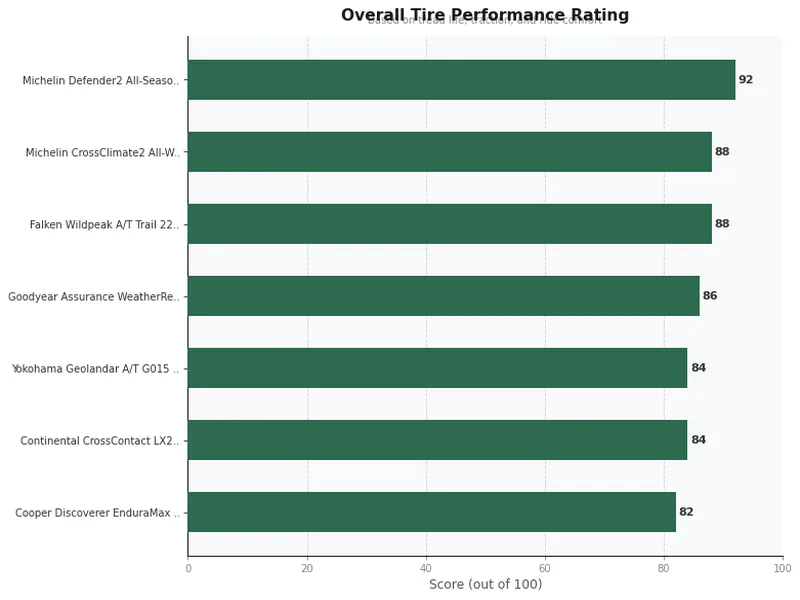
If you own a Subaru Outback and you can only buy one type of tire for the next several years, the Michelin CrossClimate2 A/W CUV is it. Michelin engineered this tire to straddle the line between a true all-season and a dedicated winter tire — and it does so without the noise or fuel economy penalties you'd normally accept with a winter-specific compound. The V-shaped tread pattern and thermal adaptive compound stay pliable in sub-freezing temperatures while delivering confident dry-road response in summer. It carries the Three-Peak Mountain Snowflake (3PMSF) rating, which means it's passed standardized snow traction tests that many all-season tires fail.
On wet pavement — the Outback's most common adversary — the CrossClimate2 performs exceptionally. Wide circumferential grooves evacuate standing water efficiently, and the sipe density across the tread blocks gives you bite on light slush and refreezing surfaces. Michelin claims up to one extra year of tread life versus its predecessor, and real-world wear data backs that up. For an Outback that pulls daily highway duty, occasional mountain runs, and the random dirt road detour, this is the most complete package in the 2026 market.
The M+S rating means it's also approved for mud and snow use. The CUV-specific casing is tuned for the slightly higher load requirements of crossover vehicles, which translates to more consistent handling feedback through the Outback's electrically assisted steering. You'll pay a premium over budget alternatives, but the CrossClimate2's multi-year tread life makes the per-mile cost surprisingly competitive.
Pros:
Cons:
Goodyear's Assurance WeatherReady is the tire you choose when your Outback regularly crosses from fall into early winter conditions — the kind of driving where you hit dry morning roads, a wet afternoon commute, and a dusting of unexpected snow before dinner. Like the Michelin, it carries the 3PMSF certification. But the WeatherReady takes a slightly different approach: its Evolving Traction Grooves are designed to open up as the tire wears, maintaining wet and snow grip throughout its service life rather than degrading as the tread depth decreases.
The Weather Reactive Technology in the compound uses soybean oil to keep the rubber flexible in cold conditions without the stiffness common to traditional all-season compounds. In practice, this means better early-morning traction on cold pavement — a genuine benefit for Outback owners who live in areas with frequent overnight temperature drops. Goodyear also spec'd this tire with an asymmetric tread pattern, so the inside blocks handle straight-line stability while the outside ribs manage cornering loads. That split-duty design works well with the Outback's AWD system, which is constantly distributing torque between axles.
At 11.34 kg per tire, the WeatherReady is a reasonable weight for this category — not ultralight, but appropriate for the compound thickness and construction needed to deliver genuine winter capability. If you're comparing this to our picks in the best tires for Florida heat and rain guide, note that the WeatherReady is optimized for cold-weather transitions rather than extreme heat cycling.
Pros:
Cons:
The Yokohama Geolandar CV G058 is built around a core principle that's underrated in the all-season SUV segment: daily driving comfort. Yokohama's staggered multi-pitch tread pattern breaks up the resonant frequencies that cause tire roar at highway speeds. The result is one of the quietest riding tires you can put on a Subaru Outback in 2026 — genuinely library-quiet at 65 mph, which makes long-distance highway cruising significantly less fatiguing. If you spend more time on interstates than fire roads, this distinction matters.
The G058 doesn't sacrifice all-weather performance for that quiet ride. Its 2D and 3D combination sipes create aggressive biting edges that activate in cold, icy, or slushy conditions — delivering grip that outperforms what you'd expect from a comfort-focused tire. The micro-silica rubber compound manages wet-road traction without the hardness that typically compromises cold-weather flexibility. Serrated outer grooves channel slush away from the contact patch, preventing hydroplaning in heavy rain. The compound is formulated for long tread life, which complements the G058's long-haul highway orientation.
This is the tire for Outback owners who primarily see paved roads — suburban commuters, long-distance travelers, and drivers who want all-weather capability without giving up refinement. If noise reduction is your top priority and you want to understand how tread pattern geometry affects acoustics, the Wikipedia article on tire construction provides useful background on pitch sequencing.
Pros:
Cons:
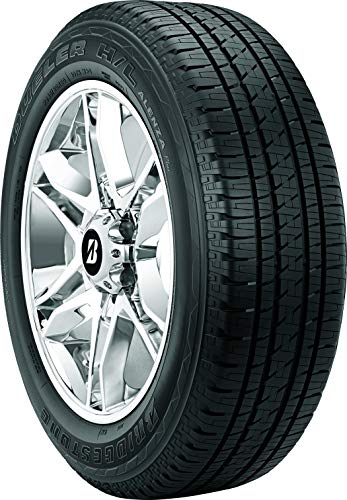
The Bridgestone Dueler H/L Alenza Plus is the tire for Outback owners who drive a lot — and want documentation to prove it. Backed by an 80,000-mile limited treadwear warranty, this is one of the longest coverage claims in the all-season SUV segment. Bridgestone achieved this through a combination of a harder-wearing compound and optimized tread geometry that promotes even wear across the contact patch. The real-world implication: if you're putting 20,000+ miles per year on your Outback, the Alenza Plus has a strong actuarial case for being your lowest cost-per-mile option in 2026.
The Alenza Plus also delivers improved fuel efficiency compared to its predecessor, the original Dueler H/L Alenza — a benefit that compounds over 80,000 miles into real savings at the pump. All-season performance is solid: wet-road traction is confident, dry handling is predictable, and light snow capability is present without being exceptional. This is a highway touring tire at heart. It does exactly what highway touring SUV tires should do — absorb road imperfections, resist wear, and keep fuel economy reasonable — without pretending to be something it isn't.
Fit note: this specific ASIN covers the P235/50R19 sizing, which fits Outback trims equipped with 19-inch wheels. Verify your existing tire size before purchasing. If you're researching how this compares to other long-warranty highway tires, our best tires for Toyota Camry guide covers several of the same brands in sedan-specific fitments with useful cross-reference data.
Pros:
Cons:
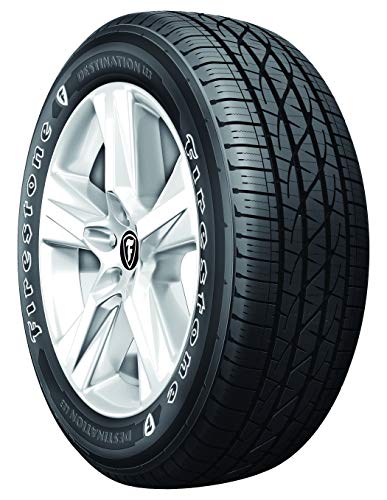
The Firestone Destination LE3 is the smart buy for Outback owners who want dependable all-season performance without paying Michelin or Bridgestone prices. Firestone positions this as its longest limited warranty offering — a meaningful commitment from a brand with Bridgestone's manufacturing infrastructure behind it. The LE3 delivers reliable wet, dry, and snow performance across all conditions a typical Outback sees in moderate-climate markets. Full-depth sipes and circumferential grooves manage water evacuation effectively, and the tread compound stays reasonably compliant in cold weather for a value-tier tire.
The "sustained performance throughout tread life" claim is the LE3's real differentiator at this price. Cheaper tires often feel confident when new and degrade noticeably past 30,000 miles. The LE3's compound formulation resists this performance cliff better than most competitors in its price bracket. Snow traction is genuine — not class-leading, but you won't be stranded in the Outback's typical operating conditions. Dry handling is composed and predictable, with enough lateral stiffness to make the Outback feel planted during lane changes.
This is the tire that makes sense if you're replacing a full set on a higher-mileage Outback and want to maximize value without compromising safety. It's also worth keeping a tire repair kit in your cargo area regardless of which tire you run — sidewall damage happens on any compound, and being prepared keeps a minor incident from turning into a full replacement.
Pros:
Cons:
The Falken Ziex CT60 A/S is purpose-engineered for CUVs and crossovers — not adapted from a passenger car platform, not borrowed from a light truck line. That design-from-scratch approach shows in the way it handles the Subaru Outback's specific dynamics. The high-rigidity outside shoulder rib is calibrated for the lateral loads crossovers generate during lane changes and cornering, where the higher center of gravity creates more roll than a sedan would. You feel it immediately: the CT60 provides sharper turn-in response and more communicative feedback than most all-season tires in this category.
Wet performance is the CT60's other strong suit. Four wide circumferential grooves evacuate water aggressively, and the asymmetric tread pattern uses polygonal-shaped inside grooves to multiply biting edges in wet and light-snow conditions. In heavy rain, the CT60 resists hydroplaning confidently — a direct result of those wide channels getting water out from under the contact patch fast. The 3D Canyon Sipes interlock the shoulder blocks to combat the edge wear that crossovers disproportionately inflict on the outer tread blocks, extending wear life in the process.
If you're the type of Outback driver who takes mountain curves seriously and wants a tire that keeps up with your inputs rather than washing out at the limit, the CT60 is your pick. It's the tire that makes the Outback feel like a driver's car rather than just a transport appliance.
Pros:
Cons:
The General Altimax RT45 is the tire you recommend to someone who needs a full set of quality all-season rubber right now without spending premium dollars. General Tire is a Continental subsidiary, and that engineering lineage shows in how the RT45 outperforms its price point. The 75,000-mile limited treadwear warranty is a genuine statement of confidence — most budget competitors don't make that commitment. The compound delivers reliable braking on wet roads and consistent traction in light snow, which covers the operational envelope of most Outbacks in temperate and mild-winter markets.
The RT45 is a well-rounded, honest tire. Dry handling is responsive and predictable. Wet braking distances are competitive with tires in the tier above it. The tread pattern is conventional enough to be low-noise at highway speeds without the acoustic engineering investment of the Yokohama Geolandar. What you're giving up compared to the Michelin and Goodyear: 3PMSF certification (the RT45 is M+S only), and the premium compound's edge in sub-freezing temperatures. In most of the continental US, that trade-off is entirely acceptable.
If you're shopping for a replacement set on an older Outback, or you're in a mild-winter market and don't want to over-invest, the General Altimax RT45 delivers outstanding value. Keep in mind that even the best all-season tire has limits — for areas that see sustained ice or heavy snowfall, supplementing with tire chains for emergency traction is a smart backup plan.
Pros:
Cons:
The Outback's AWD system handles torque distribution, but grip still comes from rubber meeting road. Climate is your most important selection filter:
The Outback has been sold with multiple wheel sizes across different trim levels and model years. Getting the size right is non-negotiable:
In the all-season tire world, you're always trading between compound softness (better grip) and compound hardness (longer life). Here's how to think about it:
The Outback is marketed as a comfortable touring crossover. Putting a loud, stiff tire on it undermines the entire ownership experience. Cabin noise is a function of tread pattern pitch sequencing — manufacturers like Yokohama invest heavily in acoustic engineering that cheaper competitors skip. Before committing, check professional tire tests that include interior noise measurements at 50 and 70 mph. Ride compliance also affects how Subaru's EyeSight driver assistance system performs: jarring road shock can momentarily affect camera positioning in vehicles with forward-facing safety cameras.
The Subaru Outback uses different tire sizes depending on trim level and model year. The most common fitments are 225/65R17 for base and mid-range trims and 235/55R18 or 235/50R18 for higher-trim models. Some Wilderness and premium trims use 225/65R17 with a higher load rating. Always verify your specific size on the driver's door jamb sticker before purchasing — don't rely on the tire currently mounted, which may differ from the factory specification.
All-season tires are adequate for light-to-moderate snow in the 2-4 inch range on maintained roads. For Outback owners who regularly drive in heavy snowfall, mountain passes, or sustained below-freezing temperatures, tires carrying the Three-Peak Mountain Snowflake (3PMSF) certification — like the Michelin CrossClimate2 or Goodyear Assurance WeatherReady — provide meaningfully better snow traction than standard M+S all-seasons. If you face severe winters, a dedicated winter tire set on a second wheel set is the safest and highest-performing solution.
With proper rotation every 5,000–7,500 miles, correct inflation maintained throughout, and alignment checked annually, quality all-season tires should last 50,000–80,000 miles on a Subaru Outback. The Outback's AWD system distributes wear more evenly across all four tires than a two-wheel-drive vehicle, which helps with longevity. Tires with high-mileage warranties like the Bridgestone Dueler H/L Alenza Plus (80,000 miles) and General Altimax RT45 (75,000 miles) are realistic targets when maintained properly.
Yes — rotation is essential on the Outback. Subaru's symmetrical AWD system sends power to all four corners, but front tires still wear faster due to steering loads. An uneven tire diameter difference greater than 1/4 inch across the four tires can strain the center differential and transfer case. Rotate every 5,000–7,500 miles and replace all four tires simultaneously when worn. Mismatched tires on an AWD Subaru cause real mechanical stress, not just uneven grip.
Michelin consistently ranks at the top for the Subaru Outback in 2026 based on combined wet traction, tread life, cold-weather performance, and ride quality. The CrossClimate2 A/W CUV is the best single tire for most Outback owners. Goodyear's Assurance WeatherReady is the closest competitor and the better choice in budget-constrained situations where you still need 3PMSF capability. For pure longevity, Bridgestone's Dueler H/L Alenza Plus with its 80,000-mile warranty is the standout value over a multi-year horizon.
The standard Outback Wilderness comes equipped from the factory with all-terrain tires for a reason — it's tuned for off-pavement capability, and the additional sidewall height and aggressive tread pattern are part of that package. Replacing Wilderness tires with pure highway tires reduces off-road traction significantly and may affect the vehicle's ground clearance perception. For Wilderness owners who do regular trail driving, keep the all-terrain OEM size. If your Wilderness stays on paved roads, an all-season tire with M+S rating is acceptable, but verify the load rating matches Subaru's specification first.
 |
 |
 |
 |

About Marcus Chen
Marcus Chen has over twelve years of hands-on experience modifying cars across a range of platforms — from commuter builds to track-focused setups — with deep expertise in suspension tuning, wheel and tire fitment, and performance upgrades that improve driving dynamics without sacrificing day-to-day reliability. He has worked with both bolt-on and engineered modifications and brings a methodical, results-focused approach to evaluating performance parts. At CarCareTotal, he covers performance upgrades, suspension and handling, and wheel, tire, and drivetrain modifications.
Get some FREE car parts & gear.. Or check out the latest free automotive manuals and build guides here.
Disable your ad blocker to unlock all the hidden deals. Hit the button below 🚗
| | | |
