Car Care ›
by Diego Ramirez
Is your car's exterior looking rough — and you're not sure whether to repaint or wrap it? Here's the direct answer: for most drivers, car wrap cost vs repaint comparisons favor wrapping when you want flexibility, lower short-term outlay, and factory paint protection underneath. But repainting is the right call in specific scenarios, and picking the wrong option is a costly mistake you won't enjoy fixing. This guide gives you the numbers, the logic, and the real-world context to decide.
Both methods can completely transform your vehicle's appearance. But they solve different problems, and neither is universally superior. Before you spend a dollar, you need to know which one fits your situation. For more guidance on keeping your vehicle looking and running its best, browse the car care category.
Contents
Let's cut straight to pricing. The gap between wrap and paint is bigger than most people expect — and it shifts significantly based on vehicle size, material tier, and labor market.

A professional full vehicle wrap runs between $2,000 and $10,000 depending on vinyl grade, vehicle complexity, and installer rates. Here's the breakdown by tier:
Material alone costs $500–$2,500 for a full car's worth of quality cast vinyl. Labor is typically the larger share — skilled installers charge $75–$125/hour, and a complete wrap takes 20–40 hours depending on vehicle complexity.
Wrap removal, when the time comes, adds $500–$1,500 to the total lifetime cost. Factor that in when comparing wrap to paint.
Paint spans an even wider range — from a budget respray to a show-quality custom finish that costs as much as a used car:
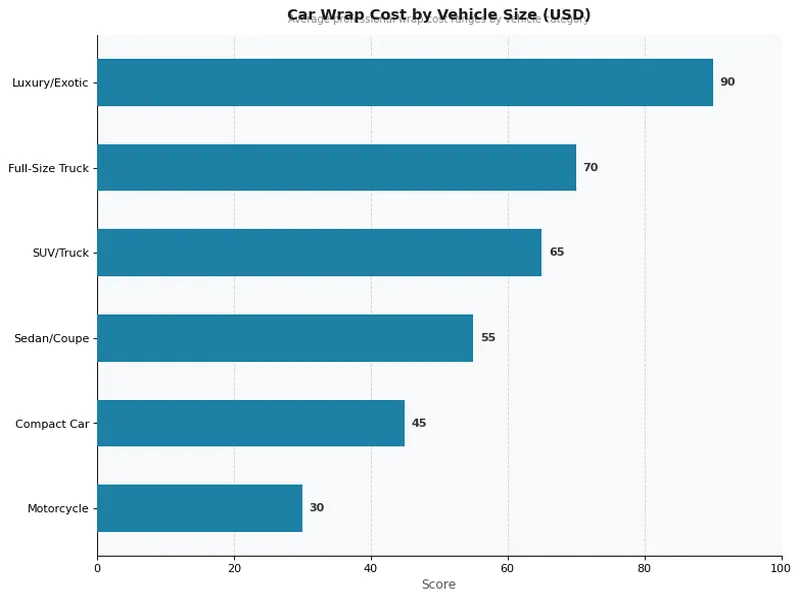
| Vehicle Size | Professional Wrap | Economy Paint | Mid-Grade Paint | Premium Paint |
|---|---|---|---|---|
| Compact / Sedan | $2,000–$3,500 | $300–$900 | $1,000–$3,000 | $4,000–$8,000 |
| Mid-Size SUV / Crossover | $3,500–$5,500 | $500–$1,200 | $1,500–$4,000 | $5,000–$10,000 |
| Full-Size SUV / Pickup Truck | $5,000–$7,500 | $600–$1,500 | $2,000–$5,000 | $6,000–$12,000 |
| Exotic / Specialty Body | $7,000–$10,000+ | N/A | $5,000–$10,000 | $10,000–$25,000+ |
The key takeaway: at the mid-grade tier, wrap and paint cost nearly the same. Below that, cheap paint beats cheap wrap for value. Above mid-grade, premium paint blows past wrap pricing fast — but nothing replicates what a show-quality respray looks like in person.

Most people pick based on what looks cool online. That's the wrong approach. Match the method to your actual situation and goals — and the answer becomes obvious.
Wrap is the clear right call in these situations:
The wrap-or-paint decision is similar to the summer tires debate — it's not about which option is objectively better, it's about which one fits how you actually use the vehicle.
Don't wrap when any of these apply:
Warning: Never wrap over peeling clearcoat or bubbling paint — the vinyl will start lifting within weeks, and you'll end up paying twice to fix the same surface.
Abstract price ranges mean nothing without context. Here's how car wrap cost vs repaint plays out across common vehicle types and real-world situations.
If budget is the primary constraint, your realistic options narrow fast:
For vehicles like a Ford Escape or Toyota RAV4 with fading OEM paint but solid mechanicals, a mid-grade wrap at $3,500–$4,500 often makes more financial sense than a $6,000 quality respray — especially if you plan to sell within 5 years.
For work trucks like a Toyota Tacoma, a vinyl wrap adds surface protection against daily job-site abuse without the frustration of watching expensive paint get dinged on day three.
At the high end, the economics shift in interesting ways:
At the premium tier, wrap wins on cost-per-visual-effect. Paint wins on longevity and prestige. Your priority determines which one earns its price tag.
DIY vinyl wrapping is possible. But it is not simple, and the difference between a clean professional install and a lumpy DIY job is visible from 20 feet away. Be honest about your skill level before you commit.
DIY wrapping has a realistic scope. Here's where it's viable:
If you've tackled other DIY surface protection projects — like applying a roll-on truck bed liner — you have the mindset for a basic partial wrap. Full vehicle wraps, however, are a categorically different skill level. Skip the DIY full wrap unless you have hands-on training or prior experience on a practice vehicle.
For DIY paint work, the floor is actually lower for spot repairs and rattle-can touch-ups — but a full respray requires a proper spray environment, correct reducer ratios, and real gun technique. See the EPA's automotive surface coating guidelines if you're building a DIY spray setup — compliance matters and fines are real.
Hire a professional installer when any of these conditions apply:
Vet your installer before you commit. Ask for a physical portfolio, specifically for vehicles with similar body complexity to yours. A shop that delivers clean installs on flat-sided Tesla Models may struggle badly on a late-model Mustang or a Ram 1500 with its sculpted hood. Get at least three quotes. Price variance between shops for the same vehicle is often $1,500–$2,500.
General vehicle maintenance directly affects how well either treatment holds up over time. If you're not already working through a solid upkeep routine, these 8 great pointers for maintaining your vehicle are worth reviewing — a properly maintained car is a better candidate for both wrap and paint work.
The installation is just the beginning. How you maintain the finish over time determines whether you get 3 years or 7 years out of a wrap, and whether your paint stays protected for a decade or starts failing in five.

Vinyl wraps are not maintenance-free. These are the non-negotiable rules:
A quality paint job needs consistent attention to reach its potential lifespan:
One thing often overlooked: a vehicle's mechanical health affects how long you can realistically enjoy any exterior upgrade. If your car is showing signs like unusual exhaust smoke colors, address those issues before spending on appearance work. A well-running vehicle makes the investment in either wrap or paint far more worthwhile long-term.
A quality vinyl wrap installed by a professional lasts 5–7 years with proper care. Budget wraps from lower-grade calendered vinyl may begin lifting at edges within 2–3 years. A mid-grade professional paint job at the same price point will typically outlast the wrap — quality base/clear can hold for 10–15 years before needing correction work. Wrap wins on flexibility and reversibility; paint wins on raw longevity. If you're keeping the vehicle for over 8 years, paint almost always wins the long-term cost calculation.
Done correctly, wrapping protects resale value rather than hurting it. When you remove the wrap before selling, the buyer sees factory paint in condition it would never reach if it had been exposed to the elements for the same period — that's a genuine selling point. Where wrapping hurts is when a dated or low-quality wrap is left on at sale time, or when the wrap has been damaged and not replaced. Always budget for professional wrap removal ($500–$1,500) when calculating total cost of ownership.
Yes, but there are strict conditions. The respray must be fully cured — give it a minimum of 30 days before applying vinyl. The paint must have no peeling, lifting, or adhesion failures. Single-stage enamel without clearcoat is risky because vinyl adhesive can lift the enamel when removed later. If the paint history is unknown, test a 12-inch section of wrap in an inconspicuous area for two weeks before committing to a full application.
The car wrap cost vs repaint decision comes down to one question: what do you actually need from your vehicle's exterior, and for how long? If your existing paint is solid, you want flexibility, and you're not planning to keep the vehicle for more than 7–8 years, wrap is the smarter financial play for most drivers. If you want permanence, depth of finish, or you're dealing with a failing surface, invest in a quality respray and protect it with ceramic. Get three quotes — from both wrap shops and body shops — describe exactly what outcome you want, and let the numbers make the decision for you.
 |
 |
 |
 |

About Diego Ramirez
Diego Ramirez has been wrenching on cars since his teenage years and has built a deep practical knowledge of automotive maintenance and paint protection through years of hands-on work. He specializes in fluid service intervals, preventive care routines, exterior protection products, and the consistent habits that extend a vehicle's lifespan well beyond average. At CarCareTotal, he covers car care guides, cleaning and detailing products, and exterior maintenance and protection reviews.
Get some FREE car parts & gear.. Or check out the latest free automotive manuals and build guides here.
Disable your ad blocker to unlock all the hidden deals. Hit the button below 🚗
| | | |
