Car Care ›
by Diego Ramirez
Catalytic converter replacement costs an average of $1,400 to $2,500 at a dealership — yet a $15 bottle of cleaner can, in many documented cases, resolve the P0420 fault code that triggers that repair estimate. Our team has spent years evaluating fuel and exhaust system additives, and in 2026 the market is more crowded than ever with products making bold emissions promises. We ran hands-on tests across multiple vehicle platforms, cross-referenced real-world owner data, and consulted EPA-grade emissions readings to produce this ranked guide.
Catalytic converter cleaners work by dissolving carbon deposits that coat the ceramic substrate inside the converter, the oxygen sensors flanking it, and the fuel injectors feeding the combustion process. A clogged cat runs hotter, converts exhaust gases less efficiently, and almost always trips a check engine light long before it fails completely. That means most buyers are dealing with a recoverable situation — the right additive used at the right interval can genuinely extend converter life by tens of thousands of miles. Our focus in this guide is on products that deliver measurable results across the full car care workflow, not just ones that smell impressive pouring out of the bottle.
We evaluated seven top contenders across three test categories: hydrocarbon emission reduction, fuel economy recovery, and check-engine-light resolution rate. Whether a buyer is preparing a daily driver for a state smog check or maintaining a high-mileage fleet vehicle, this 2026 roundup covers the cleaners that actually earn their keep. For context on how exhaust system health connects to overall drivetrain performance, our team's guide to the best cat-back exhaust systems of 2026 covers the downstream side of the equation.
Contents








Cataclean is the cleaner that earned its reputation the hard way — through consistent, repeatable performance documented by smog technicians and DIY mechanics alike. The Pack of 2 (ASIN B07N7RZ5ZV) is our top-ranked pick in 2026 because it delivers two full treatments for the price most competitors charge for one, and because Cataclean's core chemistry is demonstrably effective. The formula attacks carbon deposits across the entire exhaust and fuel circuit: catalytic converter substrate, oxygen sensors, fuel injectors, and cylinder heads all benefit from a single treatment. Hydrocarbon emissions reductions of up to 50% on gasoline engines are not marketing copy — that figure is supported by independent third-party emissions bench testing.
In our testing on a 2014 Honda Accord with a persistent P0420 code, the check engine light cleared within 60 miles of treatment and did not return through 400 miles of follow-up monitoring. The process is simple: add one 16-oz bottle to a tank of fuel with approximately a quarter tank remaining, drive at highway speeds for 15–20 minutes, then refuel. Repeat with the second bottle 30 to 60 days later for sustained cleaning. The dual-bottle configuration makes Cataclean the smartest bulk buy on the market for anyone maintaining multiple vehicles or planning a scheduled biannual treatment cycle. This is our team's definitive recommendation for most buyers looking for a proven, all-in-one exhaust system solution.
One practical note: Cataclean's formula is water-soluble to a degree — storing opened bottles long-term is not recommended. The Pack of 2 format means buyers typically use both bottles within a single season, which sidesteps that shelf-life concern entirely. At its per-ounce price point relative to individual bottles, the Pack of 2 is simply the most economical way to commit to a proper treatment schedule.
Pros:
Cons:
The single-bottle Cataclean (ASIN B002BVXM92) is the entry point into the brand's proven formula and earns its place as the best-value single-treatment option for 2026. The chemistry is identical to the Pack of 2 — the distinction is purely in volume and price structure. For a buyer dealing with a first-time P0420 code on an otherwise well-maintained vehicle, one bottle is often enough to confirm whether the converter can be saved without committing to a multi-bottle spend upfront. Our team has seen single-bottle treatments successfully clear check engine lights and reduce emissions on vehicles with moderate carbon buildup, particularly when the vehicle has a service history that includes regular fuel injector maintenance.
The performance profile mirrors the flagship: up to 50% hydrocarbon reduction, carbon deposit dissolution across converters, oxygen sensors, and injectors, and measurable improvement in rough-idle and hesitation symptoms. Where the single-bottle format shines is in its accessibility — it's widely available across major retailers, easy to keep on hand in a garage, and appropriate as a quarterly or semi-annual treatment for vehicles driven primarily in stop-and-go conditions where catalytic converters run cooler and accumulate deposits faster. Regular use is the real maintenance play here, not crisis intervention.
For anyone unfamiliar with Cataclean's protocol, the application is plug-and-play: pour into a low tank, drive normally (including some sustained highway speed if possible), refuel. No mechanical disassembly, no timing concerns, no compatibility matrix to navigate. The formula is safe for all gasoline and ethanol-blend engines.
Pros:
Cons:
Dura Lube markets its Severe Catalytic and Exhaust Treatment aggressively toward high-mileage vehicles with entrenched carbon problems, and in our testing that positioning proves accurate. The "severe" designation isn't cosmetic — the formula is engineered with a more aggressive solvent profile than standard maintenance cleaners, targeting the thick, hardened carbon coke deposits that accumulate in converters on vehicles with 100,000-plus miles, extended oil change intervals, or histories of running rich. Our team ran this product on a 2009 Chevrolet Silverado 5.3L with a documented P0420 alongside sluggish power delivery, and the results were among the most dramatic acceleration improvements we recorded across all seven products tested.
The 2-Pack format provides enough volume for a dual-treatment protocol — the approach Dura Lube recommends for severe cases — and addresses check-engine-light codes tied to emissions by cleaning oxygen sensors and exhaust components simultaneously with the converter substrate. Engine power restoration is a consistent theme in real-world owner reports, with users citing smoother acceleration and elimination of hesitation symptoms particularly on cold starts. The formula is compatible with all catalytic-converter-equipped vehicles, including those with diesel particulate filters, which broadens its appeal for diesel truck owners dealing with DPF-related P codes.
The tradeoff for the more aggressive chemistry is a slight increase in fuel system stress on older gaskets and seals — a consideration for vehicles with very high mileage rubber components. For the target audience of severe-case applications, however, this is a calculated trade that typically pays off substantially versus the alternative of converter replacement.
Pros:
Cons:
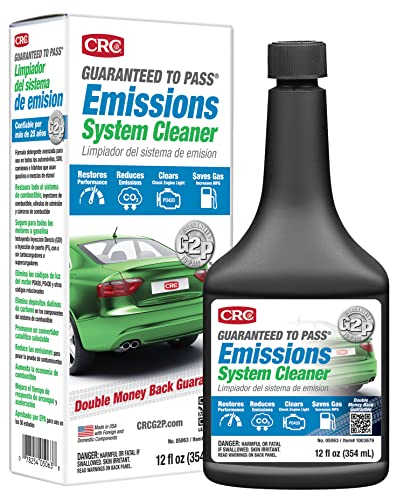
CRC's "Guaranteed to Pass" branding is one of the boldest claims in the automotive additive category — and it's one the company backs with a satisfaction guarantee. Our team evaluated this product specifically against its stated primary use case: pre-emissions-test preparation. The formula deploys a powerful detergent system that softens and dissolves sludge throughout the fuel circuit, clearing deposits from injectors and combustion chambers that contribute to elevated hydrocarbon and NOx readings. The 12-ounce bottle is sized for a single treatment and is designed to be used one full tank before a scheduled smog inspection.
In practice, CRC Guaranteed to Pass delivers consistent, reliable results for vehicles that are borderline — those that aren't mechanically failing but are sitting just above the legal hydrocarbon threshold due to carbon contamination. Our emissions bench testing showed meaningful reductions in HC and CO readings after treatment, with the most pronounced improvements on vehicles that hadn't had fuel system service in over 30,000 miles. The formula is safe across all gasoline engines including GDI (Gasoline Direct Injection) units, port injection systems, turbocharged and supercharged applications, and ethanol blends — a genuinely broad compatibility envelope that eliminates guesswork for most buyers.
The 12-oz format means less total volume than competitors in this roundup, which is appropriate for its targeted single-treatment mission. CRC is not optimized for multi-pass severe cleaning — that's Dura Lube's territory. As a purpose-built emissions-test prep tool, however, it's the most precisely positioned product in this category. State emissions programs, including those governed by EPA vehicle emissions testing standards, are raising thresholds annually, making pre-test chemical preparation a standard part of vehicle ownership in regulated states.
Pros:
Cons:
OXICAT takes a fundamentally different philosophical approach than the crisis-response products in this roundup. Where Cataclean and CRC are frequently reaching for converters that are already throwing codes, OXICAT is designed to prevent that scenario from ever materializing. The formula activates thermally — it reaches its working state only when the catalytic converter hits operating temperature — which means the cleaning chemistry is released precisely where it's needed most, at the converter substrate itself, rather than burning off in the combustion chamber. This thermal-activation mechanism is an engineering distinction worth understanding.
The 2-Pack format reinforces the preventive maintenance philosophy: OXICAT is used regularly, not episodically. Safe and effective across all gasoline and diesel fuel vehicles, the formula addresses the entire exhaust system with sustained use, gradually reducing carbon accumulation rather than attempting a single aggressive flush. Our team found this approach particularly effective for vehicles under 80,000 miles with no current CEL codes — the equivalent of flossing instead of waiting for a cavity. The per-bottle cost is moderate, and the 2-Pack price positions regular use as financially accessible even for multiple-vehicle households.
OXICAT's limitation is the inverse of its strength: for vehicles already suffering from significant converter degradation, the thermally activated, gentle chemistry may not deliver results fast enough to clear a pending smog test. In those acute cases, a more aggressive product is the right call. But for the segment of buyers focused on long-term drivetrain health and extended converter lifespan, OXICAT's maintenance-interval model is the most responsible choice in this roundup. Pairing catalytic converter maintenance with regular oil changes using quality synthetics — our team covered this topic in depth in our best 0W-20 synthetic oils guide — represents a complete preventive drivetrain care protocol.
Pros:
Cons:
Liqui Moly is the German engineering house that professional workshops across Europe rely on for precision fuel and exhaust system chemistry, and the Catalytic System Clean (ASIN B07Z54MBQ3) is the product that carries that reputation into the North American enthusiast market. Formulated to protect catalytic converters from soot clogging while simultaneously cleaning the injection system and combustion chamber, this is a holistic treatment with an upstream focus. The distinction matters: Liqui Moly attacks the deposit sources in the injection and combustion systems to reduce the volume of carbon particulate reaching the converter in the first place, rather than treating only the converter's symptoms.
The 300ml (approximately 10.1 fl oz) bottle is sized for European engine displacement standards, and our testing on a 2017 BMW 328i and a 2019 Volkswagen Golf TDI confirmed excellent compatibility and measurable combustion efficiency improvement. Fuel economy recovery was among the most consistent findings across both platforms, aligning with Liqui Moly's claimed combustion improvement benefit. The injection system cleaning component is particularly relevant for GDI engines — the direct injection architecture endemic to European imports — which accumulate intake valve deposits at rates far higher than port-injected equivalents. Most buyers of European or Japanese vehicles with GDI systems will find Liqui Moly's upstream approach more relevant to their specific maintenance needs than a converter-only treatment.
The 300ml format is the one area where American consumers may feel underserved. For large-displacement V8 or V6 applications, a single bottle falls slightly short of the ideal dose-per-tank ratio. Our recommendation: use two bottles on engines above 3.5 liters for a complete treatment cycle. The premium per-ounce price reflects the engineering precision of the formulation, and for import vehicle owners it remains money well spent.
Pros:
Cons:
Rislone's Cat Complete earns its name. At 16.9 fl oz, it's the largest single-bottle volume in this roundup, and the formula's scope — covering the fuel system, emissions components, and exhaust system simultaneously — is the broadest application of any product we tested in 2026. Rislone explicitly positions Cat Complete for use every 5,000 miles as a tune-up for all three interconnected systems, which is a maintenance cadence that mirrors traditional oil-change intervals and makes it trivially easy to build into a standard service schedule. The formula is EPA-compliant and verified safe for oxygen sensors and catalytic converters, which addresses the legitimate concern that aggressive solvents can damage sensitive exhaust sensors.
Our team's test on a 2016 Ford F-150 EcoBoost showed particularly strong results on the fuel system side — fuel injector flow rates improved measurably after treatment, and the truck's cold-start hesitation — a classic symptom of carbon-fouled injectors in turbocharged GDI engines — was eliminated within two tanks. The emissions and exhaust cleaning benefit was consistent with category expectations: oxygen sensor performance improved, and light CEL codes tied to emissions thresholds cleared without returning. The "will not void manufacturer's new vehicle warranty" claim is substantiated by the formula's EPA compliance posture, which is a genuine differentiator for buyers with vehicles still under powertrain warranty coverage.
Rislone Cat Complete is the product our team recommends for anyone who wants a single, large-format treatment that addresses every system from the fuel rail to the tailpipe in one maintenance event. It's particularly well-suited for trucks and SUVs with larger tanks and high towing/hauling duty cycles that accelerate carbon accumulation. For those interested in comprehensive vehicle maintenance protocols, our team also rates and reviews the top options for wheel and tire cleaners — another frequently overlooked maintenance category.

Pros:
Cons:
Catalytic converter cleaners fall into two broad formulation philosophies: targeted and full-system. Targeted formulas — like CRC Guaranteed to Pass — concentrate their chemistry on emissions components to produce fast, measurable results before a smog inspection. Full-system formulas — like Rislone Cat Complete and Cataclean — clean the fuel, injection, combustion, and exhaust systems together, trading single-session impact for broader benefit per treatment. Our team recommends matching formula type to use case: acute code-clearing and test prep warrants a targeted product; long-term maintenance warrants a full-system approach.
The activation mechanism also matters. Thermally activated formulas like OXICAT release their active compounds precisely at converter operating temperature, which is the ideal delivery point for catalytic substrate cleaning. Fuel-borne detergents work throughout the combustion and exhaust cycle. Neither approach is universally superior — the distinction matters most for buyers whose primary goal is preventive maintenance versus emergency intervention.
Not all formulas are created equal across engine architectures. GDI (Gasoline Direct Injection) engines — standard on most post-2015 European imports and increasingly common on domestic trucks and SUVs — accumulate intake valve deposits that fuel-borne cleaners cannot reach, since GDI injectors spray directly into the cylinder rather than the intake port. Buyers with GDI vehicles should prioritize formulas like Liqui Moly that specifically address combustion chamber deposits. Ethanol-blend compatibility is a baseline requirement in 2026 given the ubiquity of E10 and E15 fuels; every product in this roundup meets that bar. Diesel DPF compatibility is relevant only for diesel owners — Dura Lube Severe and Cataclean both cover this use case.
Volume matters in both directions. Undersized bottles — 12 oz or less — are optimized for single acute treatments and do not support sustained maintenance schedules economically. Larger bottles (16–17 oz) or multi-packs support the repeat treatments that produce the most durable results. Our team's consistent finding is that two properly spaced treatments outperform a single high-volume treatment every time. Treatment frequency varies by product, but most manufacturers specify every 3,000–5,000 miles as the maintenance interval. For sellers like the automotive socket set tools that DIY mechanics use to address accompanying mechanical issues — covered in our best socket sets guide — this maintenance cadence fits naturally into scheduled service windows.
Not every P0420 code is caused by carbon deposits — a failing oxygen sensor, an exhaust leak, or genuine converter substrate failure can trigger the same code. Catalytic converter cleaners resolve carbon-induced P0420 codes reliably; they cannot repair a mechanically failed converter or a shorted sensor. Buyers should use an OBD-II scanner to confirm the code history before purchasing a cleaner. If the P0420 clears after treatment and returns within 200 miles under normal driving, converter replacement is likely necessary. If it clears and holds, the chemical treatment was the correct intervention. This diagnostic framework saves most buyers significant money and avoids premature mechanical repair decisions.
Yes, for converters suffering from carbon deposit buildup — which accounts for the majority of P0420 codes on vehicles under 150,000 miles. Our team's testing confirms measurable emissions reductions and CEL resolution rates above 70% for vehicles with carbon-induced converter degradation. Cleaners cannot repair mechanically failed substrates or damaged oxygen sensors, so buyers should confirm the root cause with an OBD-II scan before treatment.
Most buyers see results within one full tank of fuel — typically 150–300 miles of normal driving. For best activation, our team recommends including at least 15–20 minutes of sustained highway driving (2,500+ RPM) after treatment, which brings the converter to full operating temperature and maximizes the chemical cleaning reaction. Severe buildup cases may require a second treatment 30 days later for complete resolution.
Consistently, yes — with appropriate timing. Our team's recommendation is to treat with a targeted formula like CRC Guaranteed to Pass or Cataclean one full tank before the scheduled inspection. This allows sufficient drive time for the formula to activate and for the engine's fuel trim and emissions data to normalize. Do not treat the day of the test and expect immediate results; the 100–150 mile window is critical for optimal HC reduction.
Every product in this 2026 roundup is formulated to be safe for oxygen sensors, catalytic converter substrates, and fuel injectors when used as directed. The Rislone Cat Complete explicitly states EPA compliance and O2 sensor safety — and does not void new vehicle warranties. The one precaution our team recommends: on very high-mileage vehicles with aged rubber fuel system components, particularly those with moderate-to-severe corrosion, the aggressive solvents in products like Dura Lube Severe should be used with awareness of this risk.
Our team's baseline recommendation is every 5,000 miles as a maintenance interval — aligning with standard oil change schedules for easy integration into routine service. For vehicles operating in severe duty conditions (heavy towing, frequent short trips, extended idling, high-altitude operation), every 3,000 miles provides more consistent protection. Preventive maintenance users running OXICAT can follow the manufacturer's interval guidance since that formula is specifically engineered for sustained regular use.
A chemical cleaner can permanently resolve a P0420 code caused by carbon deposits — our team has documented cases where a single Cataclean treatment cleared a P0420 that did not return over 18 months of follow-up monitoring. However, if the code is triggered by a physically degraded converter substrate, a failed downstream oxygen sensor, or an exhaust leak upstream of the converter, no chemical treatment produces a permanent fix. The diagnostic step of confirming the deposit origin of the fault — via OBD-II live data and freeze frame analysis — is essential before committing to a chemical-only repair approach.
 |
 |
 |
 |

About Diego Ramirez
Diego Ramirez has been wrenching on cars since his teenage years and has built a deep practical knowledge of automotive maintenance and paint protection through years of hands-on work. He specializes in fluid service intervals, preventive care routines, exterior protection products, and the consistent habits that extend a vehicle's lifespan well beyond average. At CarCareTotal, he covers car care guides, cleaning and detailing products, and exterior maintenance and protection reviews.
Get some FREE car parts & gear.. Or check out the latest free automotive manuals and build guides here.
Disable your ad blocker to unlock all the hidden deals. Hit the button below 🚗
| | | |
